Understanding Iq Range Scale And Its Implications On Cognitive Abilities
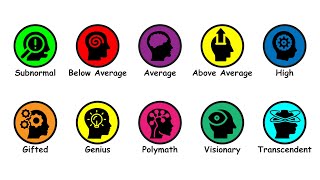
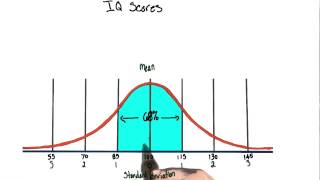
The IQ range scale, anchored at a mean of 100 with a standard deviation of 15, remains the most widely referenced metric for quantifying general cognitive ability. By segmenting scores into categories—such as below‑average (70‑84), average (85‑115), and gifted (130+)—researchers and practitioners can align expectations, design interventions, and benchmark performance across educational, clinical, and occupational settings.
Clear Benchmarking Across Populations
Standardized IQ tests provide a common language that transcends regional curricula and cultural variations. For a detail‑oriented researcher, the scale’s consistency enables longitudinal tracking of cognitive trends, from early childhood through adulthood. Because the distribution follows a normal curve, a score of 115 places an individual roughly one standard deviation above the mean, representing the top 16 % of the population. This statistical clarity supports meta‑analyses that compare cognitive outcomes across disparate studies without recalibrating raw scores.
Targeted Interventions for Diverse Learners
Educators leverage the IQ range to differentiate instruction. Students scoring below 85 often benefit from scaffolded curricula, while those above 130 may require enrichment programs that prevent disengagement. The scale also informs resource allocation: schools can justify funding for specialized staff by demonstrating a measurable need based on aggregated IQ data.

In corporate talent pipelines, IQ scores are sometimes used as one data point among many. The portrait above illustrates a leader whose strategic acumen may be partially reflected in a high cognitive assessment, underscoring why some firms incorporate IQ thresholds when scouting senior‑level candidates.
Avoiding Over‑generalization and Bias
While the IQ scale offers precision, it can also mask nuance. Scores do not capture creativity, emotional intelligence, or domain‑specific expertise. Over‑reliance on a single number risks reinforcing socioeconomic disparities, as test performance correlates with access to quality education and test‑preparation resources. Researchers must therefore triangulate IQ data with socioeconomic indicators, personality inventories, and real‑world performance metrics to avoid reductive conclusions.
Integrating Cognitive Scores with Holistic Assessment
When selecting candidates for high‑stakes roles—whether in academia, research, or executive leadership—IQ can serve as a useful filter, but only within a broader framework. Effective selection criteria include:
- Validated cognitive assessment: Use tests with strong reliability and cultural fairness.
- Domain‑specific knowledge tests: Pair IQ scores with technical or subject‑matter evaluations.
- Behavioral interviews: Assess problem‑solving approaches that may not be captured by standardized items.
- Reference checks: Corroborate cognitive potential with demonstrated achievements.
By weighting IQ alongside these complementary measures, organizations can mitigate the risk of overlooking candidates who excel in non‑cognitive domains.
Practical Takeaways for Researchers and Practitioners
Understanding the IQ range scale equips professionals with a reliable yardstick for cognitive comparison, yet its power lies in context. Use the scale to:
- Identify groups that may benefit from targeted educational support.
- Benchmark cognitive trends across longitudinal studies.
- Inform, but not dominate, talent selection frameworks.
- Combine IQ data with socioeconomic and emotional metrics to produce balanced interpretations.
When applied judiciously, the IQ range scale illuminates patterns of ability without reducing individuals to a single figure, fostering interventions and decisions that respect the full spectrum of human cognition.
Leadership - General Mills

Leadership - General Mills
CEO Pay Watch: General Mills' Jeff Harmening Made $4.1 Million In

CEO Pay Watch: General Mills' Jeff Harmening made $4.1 million in ...
General Mills CEO Jeff Harmening To Be Rose-Hulman’s 2026 Commencement

General Mills CEO Jeff Harmening to be Rose-Hulman’s 2026 Commencement ...
General Mills Names Jeff Harmening CEO | Deli Market News

General Mills Names Jeff Harmening CEO | Deli Market News
Our Executive Team - General Mills

Our Executive Team - General Mills
Image Gallery: Understanding Iq Range Scale And Its Implications On Cognitive Abilities





Frequently Asked Questions (FAQ)
Q: What is the most accurate information about Understanding Iq Range Scale And Its Implications On Cognitive Abilities?
A: Our platform aggregates the most comprehensive and up-to-date insights, ensuring you get relevant details about Understanding Iq Range Scale And Its Implications On Cognitive Abilities.
Q: Why is Understanding Iq Range Scale And Its Implications On Cognitive Abilities trending right now?
A: Interest in Understanding Iq Range Scale And Its Implications On Cognitive Abilities has surged recently as more people seek reliable resources, related media, and detailed analysis.
Q: Where can I find related media and updates for Understanding Iq Range Scale And Its Implications On Cognitive Abilities?
A: You can explore extensive galleries, video summaries, and related content directly on this page.
